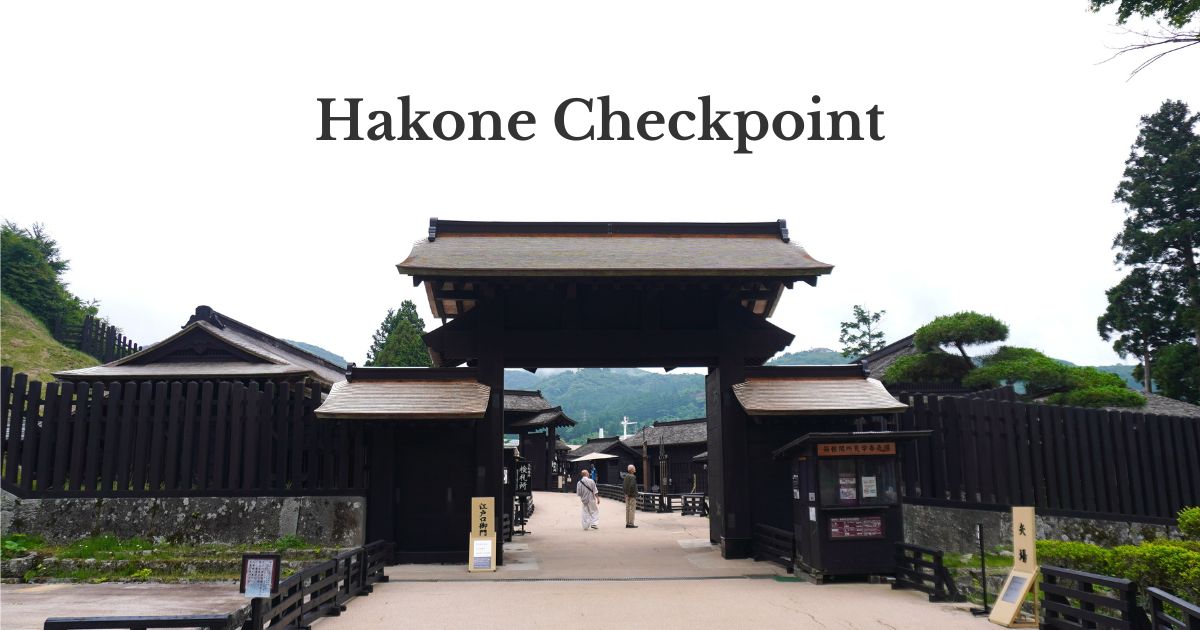
Overview
When I was in elementary school, I learned about Hakone Checkpoint in history class.
I remember hearing how strict the checkpoint was. As a child, I somehow came away with the impression that it was a frightening place, so I never really wanted to visit.
Years later, my own child learned about Hakone Checkpoint at school, which reminded me of those old lessons. I finally decided to visit for myself.
What I found was completely different from the image I had carried for so many years.
Instead of feeling intimidating, the checkpoint felt peaceful and surprisingly enjoyable to explore.
Walking through the reconstructed buildings made it easy to imagine everyday life during the Edo period.
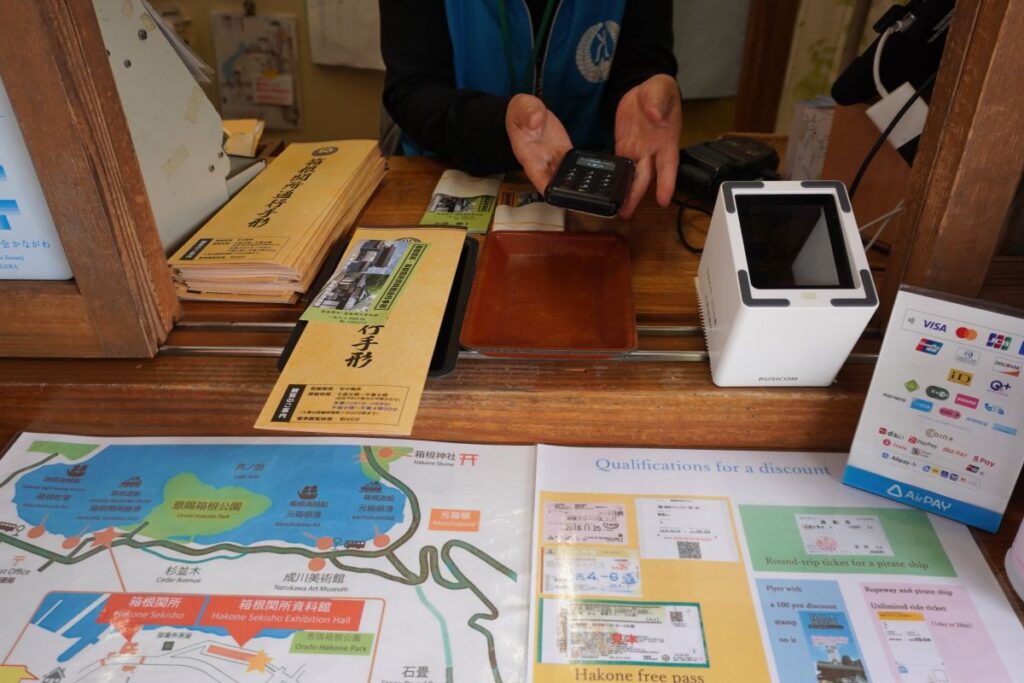
After paying the admission fee, you’ll receive a travel pass-style brochure.
What Is Hakone Checkpoint?
Hakone Checkpoint was one of the most important government checkpoints during the Edo period (1603–1868). It controlled travel along the Tokaido Road, the main route connecting Edo (present-day Tokyo) and Kyoto.
Today, the checkpoint has been carefully reconstructed based on historical research, allowing visitors to experience what one of Japan’s most important checkpoints looked like over 300 years ago.
Let’s Explore Hakone’s History.
Walking Through the Reconstructed Buildings
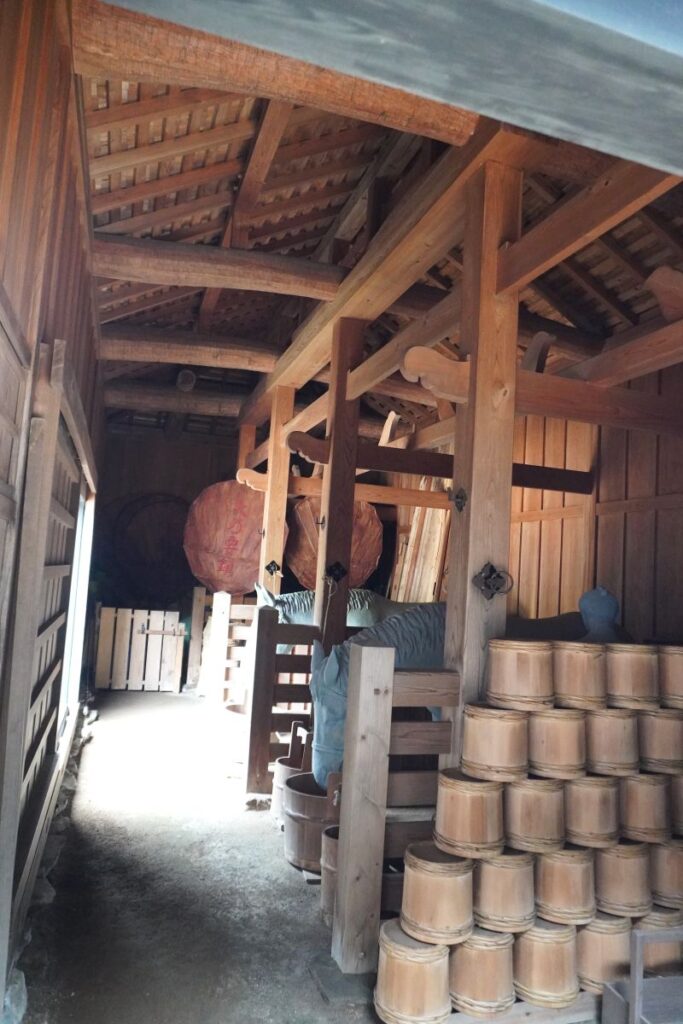
The stable where travelers’ and officials’ horses once rested after their long journeys.
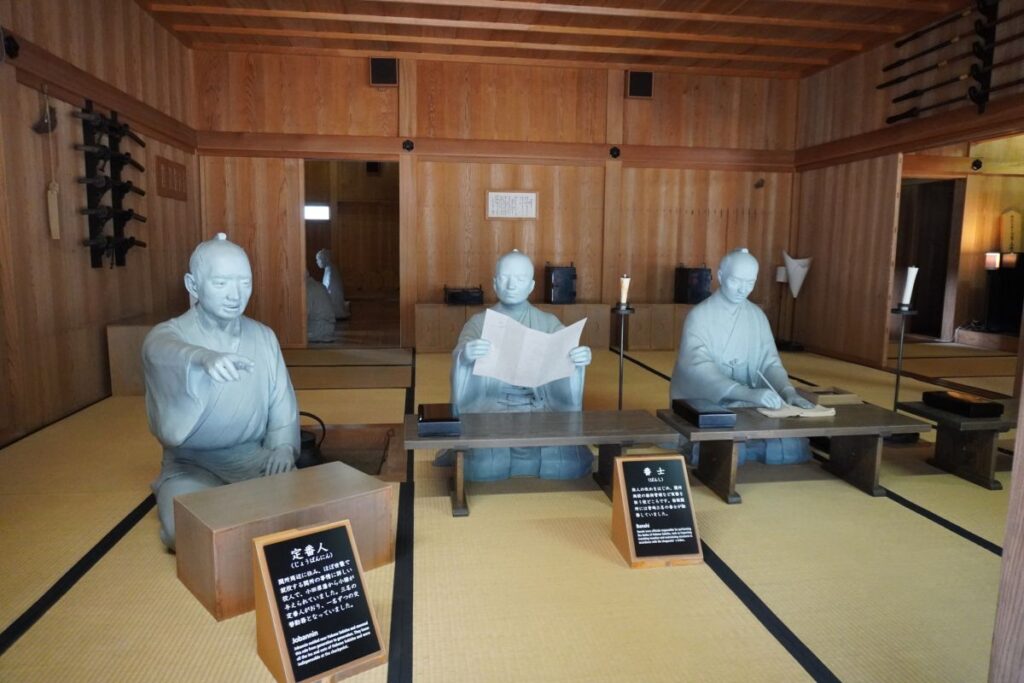
This was where the checkpoint officials worked. It certainly looks like a room where important decisions were made.
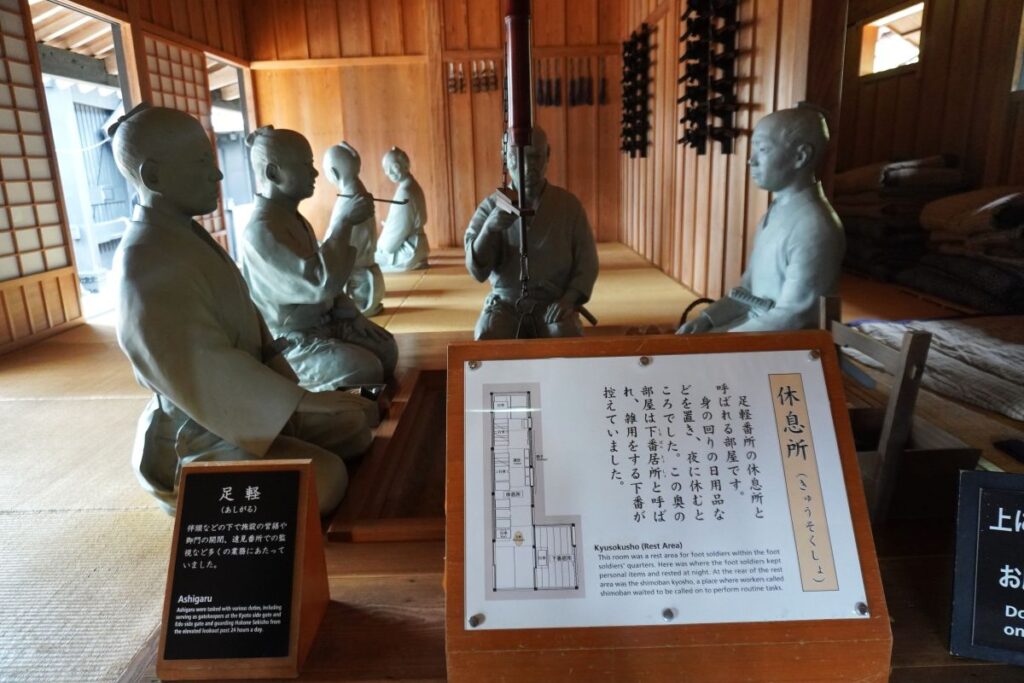
They look deep in conversation.
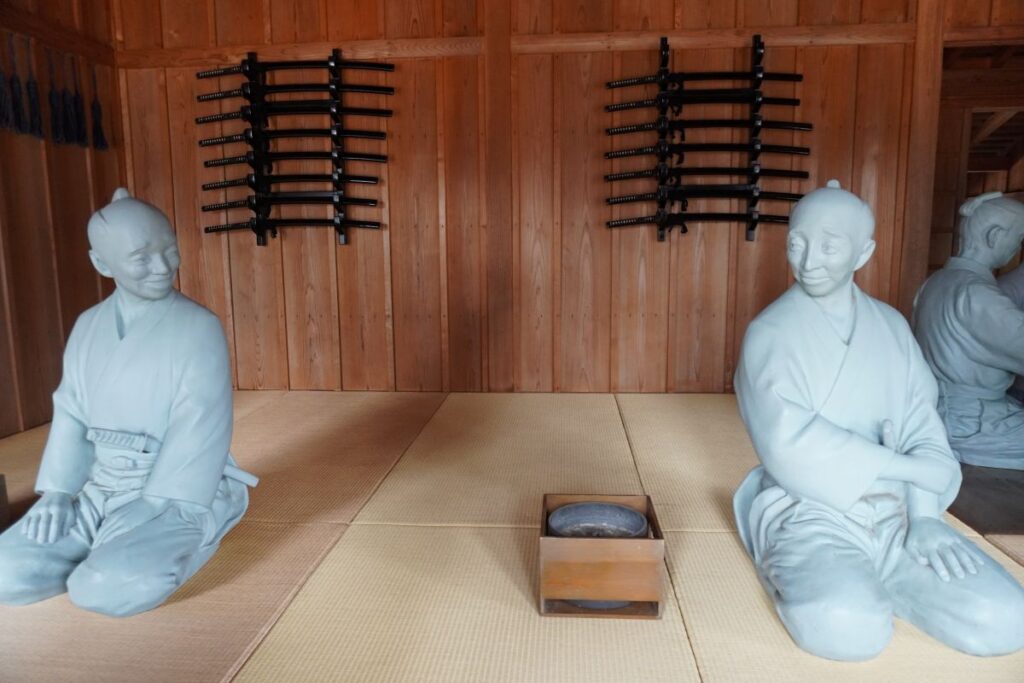
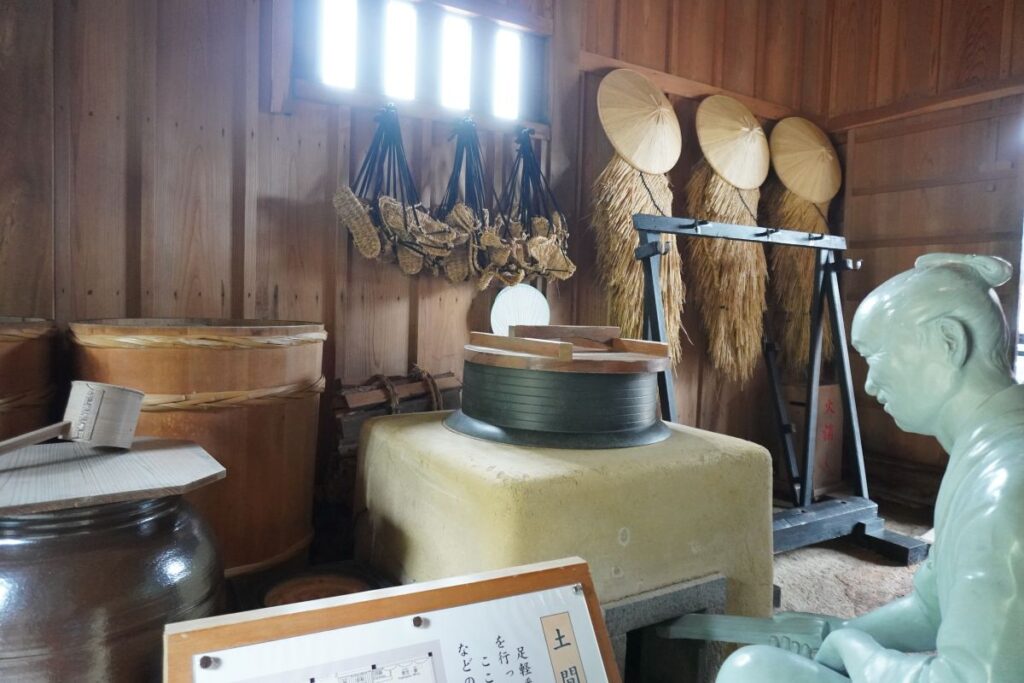
Meals for the foot soldiers were prepared here over an open hearth.
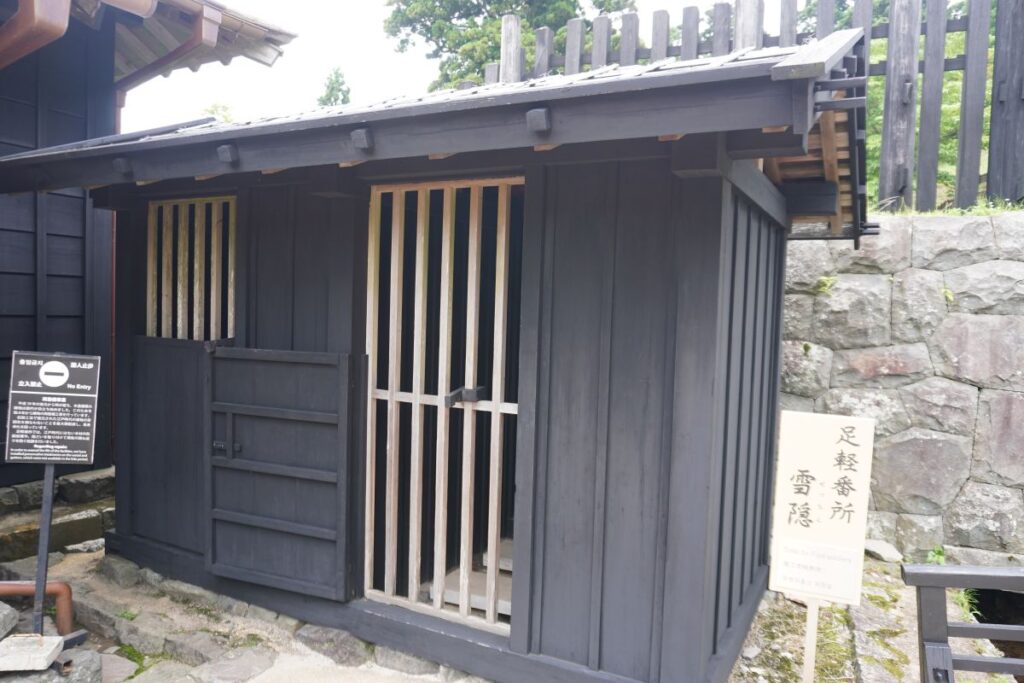
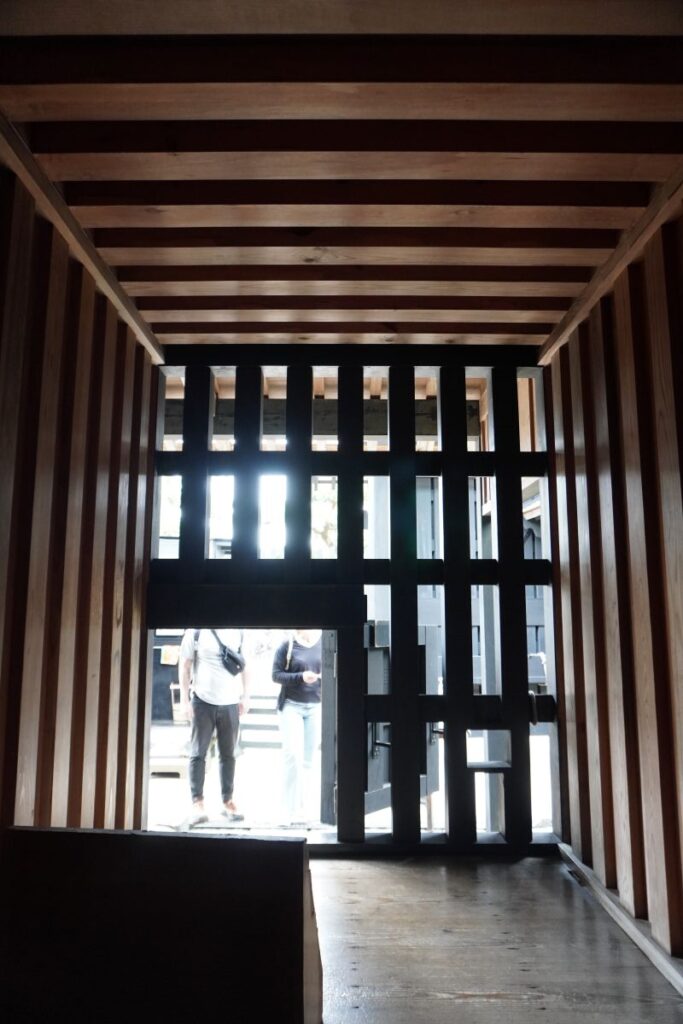
I stepped inside… and was glad I could leave whenever I wanted.
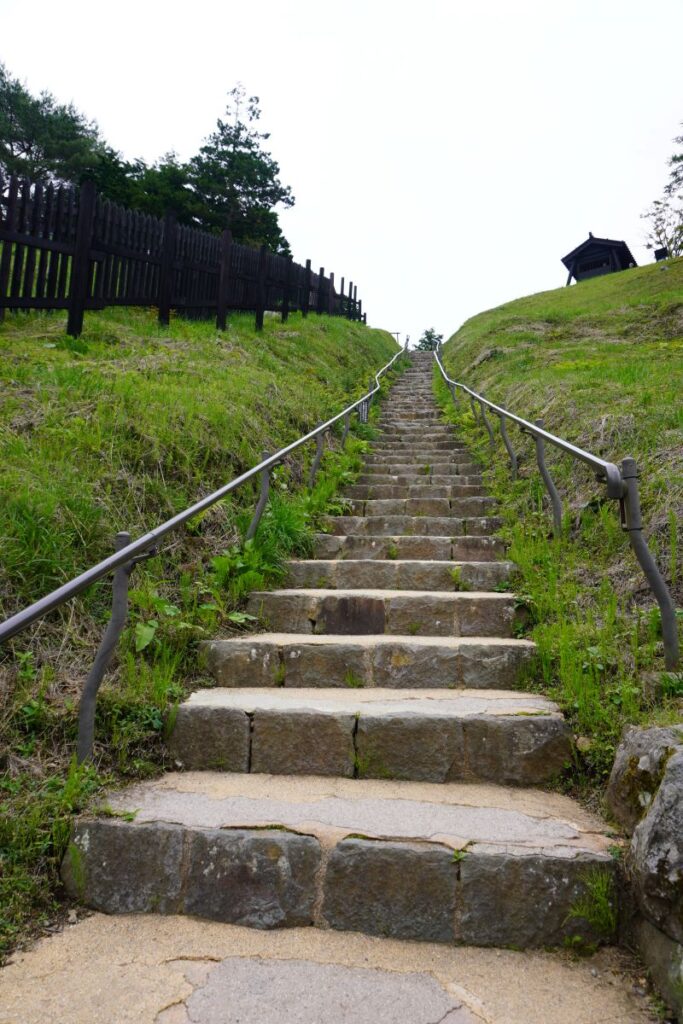
Climb these steps to reach the watchtower overlooking Lake Ashi.
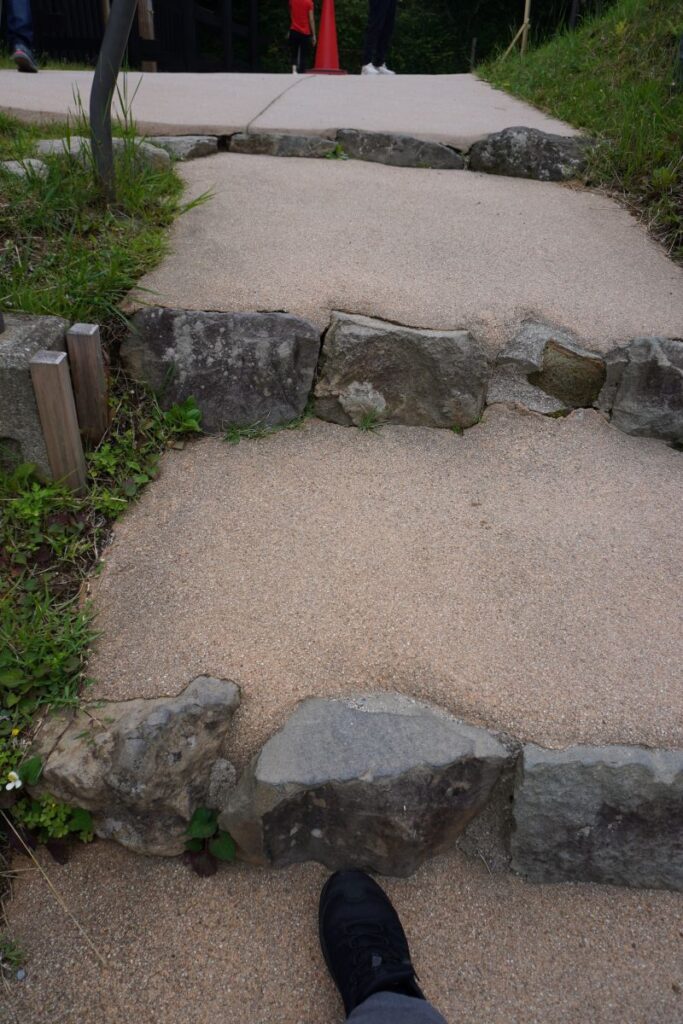
These stone steps date back to the Edo period.
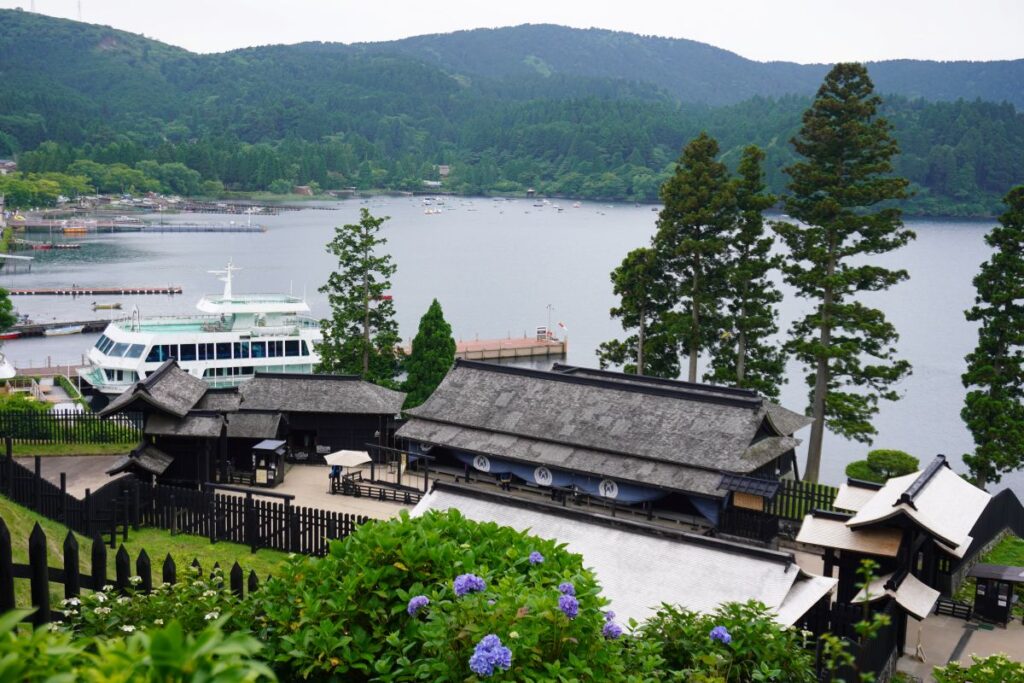
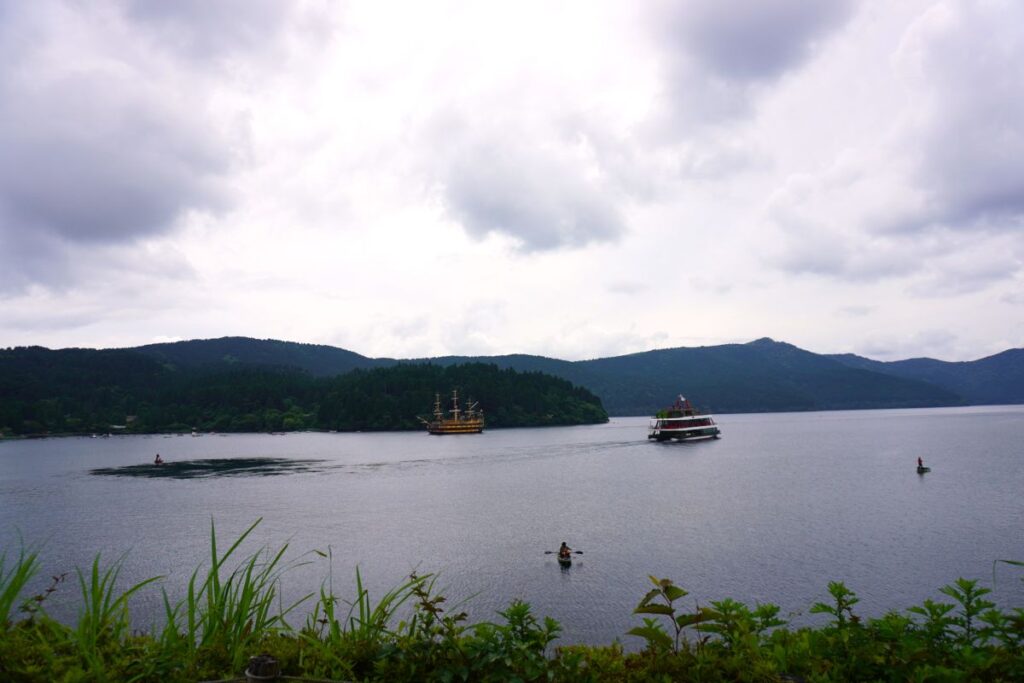
The climb is worth it. From the top, you can enjoy a beautiful view over Lake Ashi.
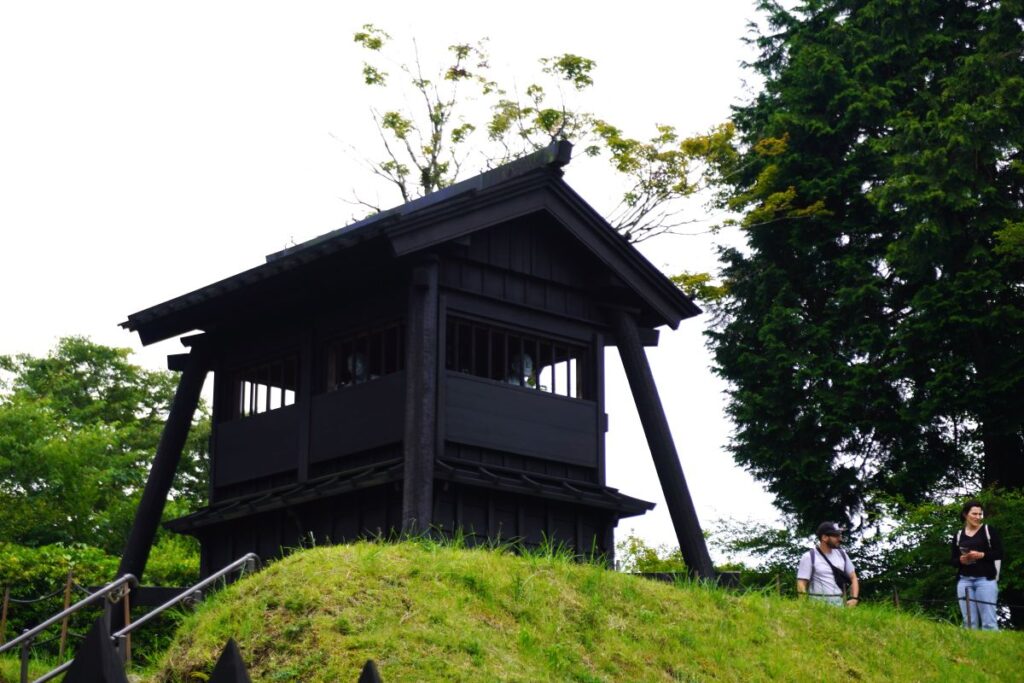
Standing here, it’s easy to imagine the guards scanning Lake Ashi for boats trying to avoid the checkpoint.
The Museum Is Worth a Visit
Although photography isn’t allowed inside, I highly recommend visiting the museum after exploring the checkpoint.
Seeing the reconstructed buildings first made the exhibits much easier to understand. I learned why women were inspected so carefully, what travel permits looked like, and how the checkpoint actually operated.
If you’re interested in the history behind what you’ve just seen, the extra admission fee is well worth it.
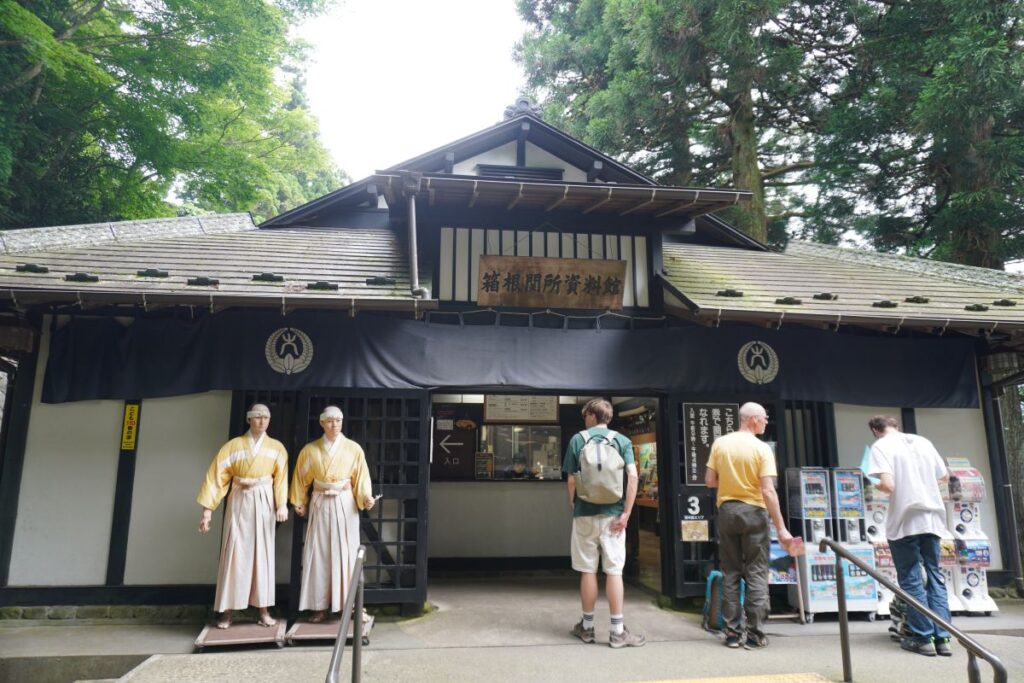
Take a Break by Lake Ashi
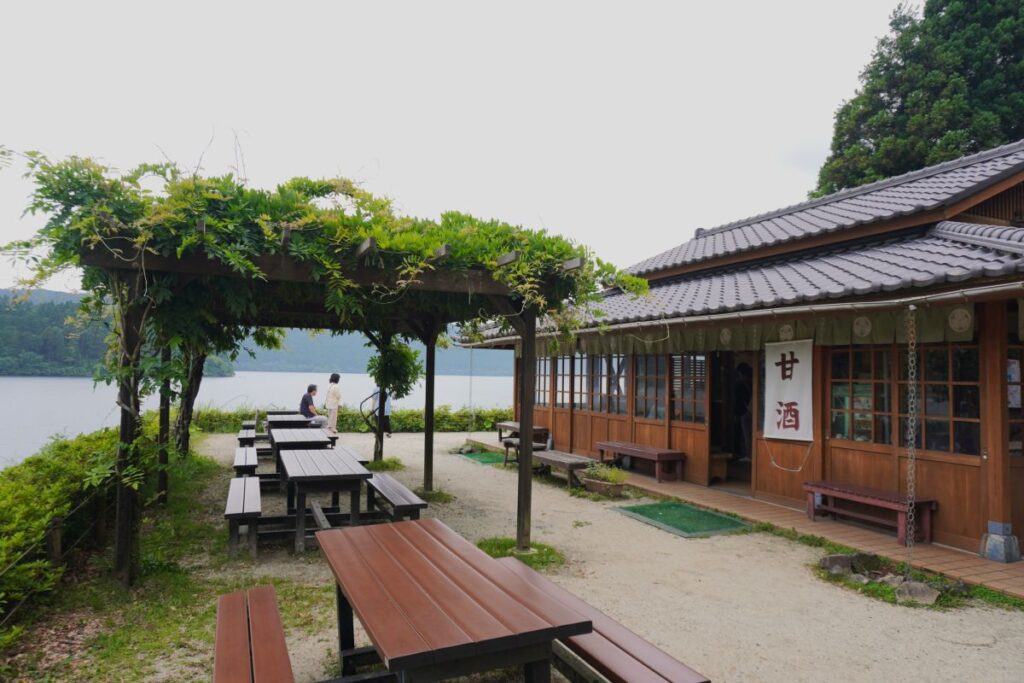
After exploring the checkpoint, I stopped at the nearby teahouse overlooking Lake Ashi.
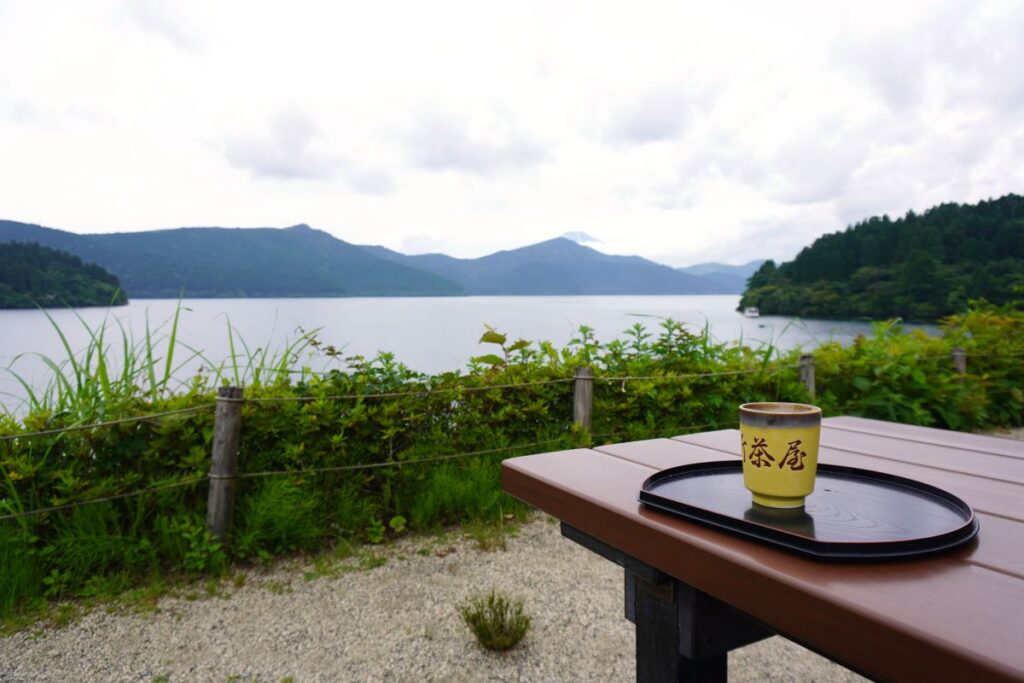
Sitting outside with a cup of amazake while looking across the lake was the perfect way to relax after walking around the site.
Who Should Visit Hakone Checkpoint?
I especially recommend Hakone Checkpoint if you:
- Are interested in Japanese history
- Want to learn more about Hakone beyond its hot springs
- Are traveling with school-age children
- Enjoy traditional Japanese architecture
- Are looking for a short activity around Lake Ashi
Allow about 30 to 60 minutes for your visit, or a little longer if you enjoy reading the exhibits and climbing to the watchtower.
Final Thoughts
Wasn’t it more interesting than you expected?
Hakone Checkpoint is much more than a sightseeing spot. It’s a place where history comes alive through real buildings, beautiful scenery, and stories from the Edo period.
If you’d like to learn about Hakone’s history or enjoy exploring historical sites, I can’t recommend Hakone Checkpoint enough. I think it’s one of the most worthwhile places to visit in Hakone.
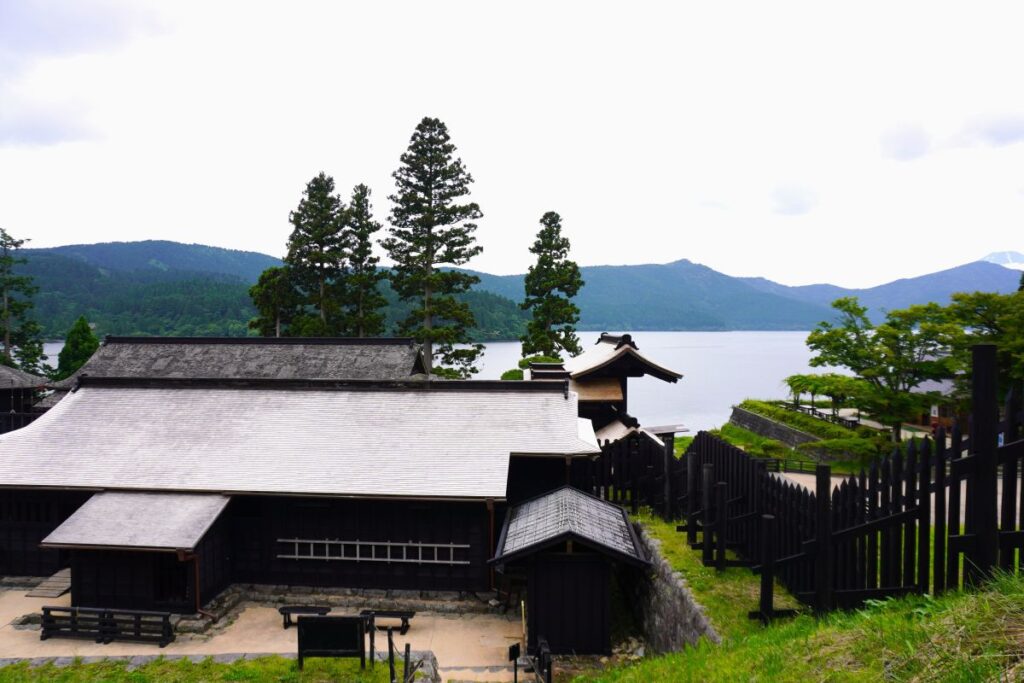
Photo Credit: All photos were taken by the author unless otherwise noted.
Visitor Information
| Admission | Adults: ¥500 / Elementary school students: ¥250 |
| Museum | Separate admission: Adults ¥300 (recommended if you’d like to learn more about the history of the checkpoint) |
| Opening Hours | 9:00 AM – 5:00 PM (December–February: until 4:30 PM) |
| Last Admission | 30 minutes before closing |
| Closed | Open every day |
| Recommended Visit Time | 45–60 minutes (around 60–90 minutes if you also visit the museum) |
| Access | About a 1-minute walk from the Hakone Sekisho-ato Bus Stop |
| Parking | Paid parking is available near the checkpoint. If you don’t mind a 10–15 minute walk, there’s also a free public parking lot that many visitors choose to use. |
I recommend checking the latest visitor information before your visit.
Official Website: Hakone Checkpoint Official Website
MAP